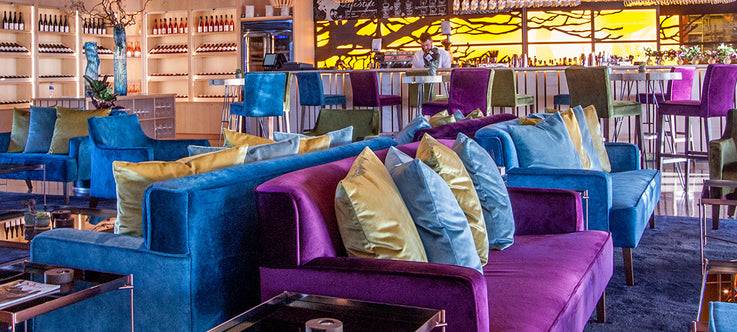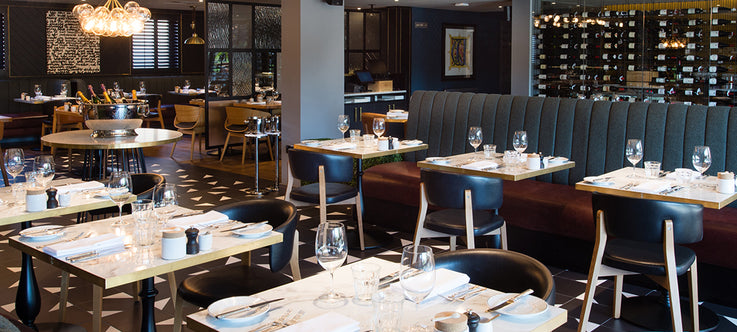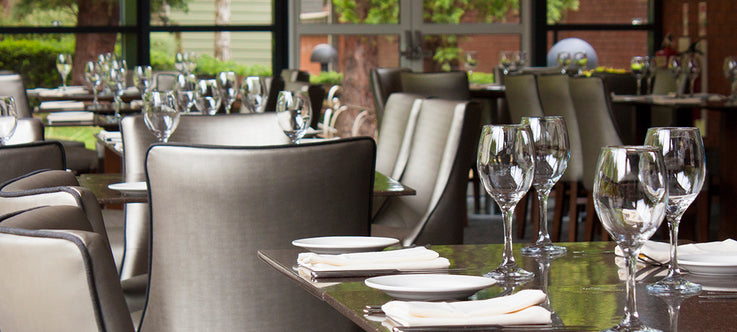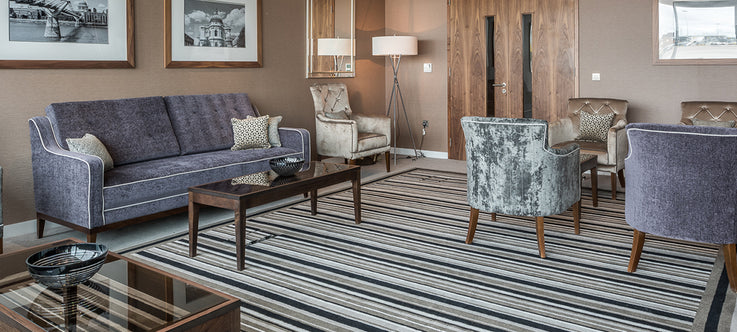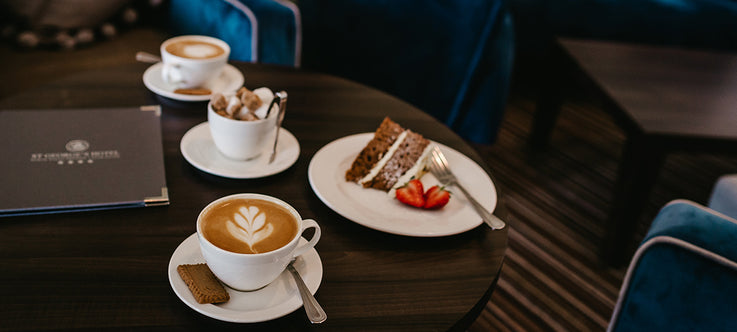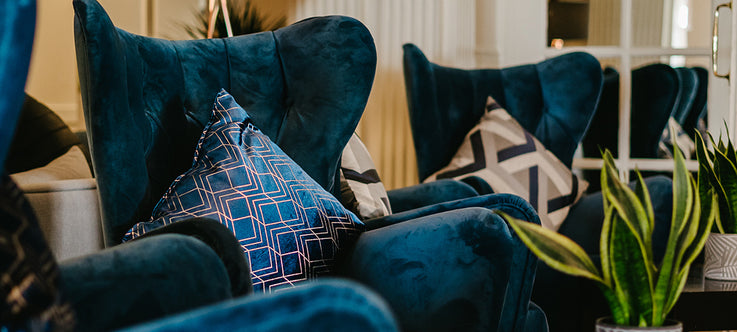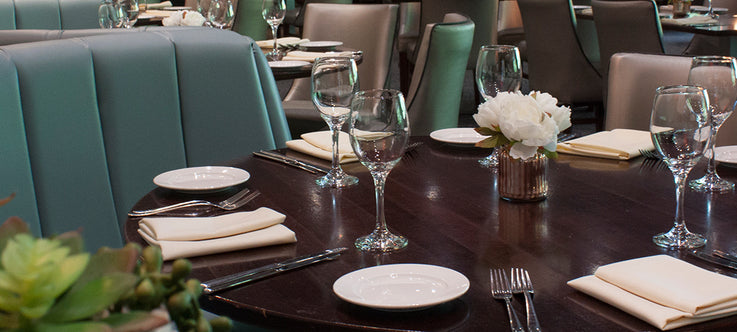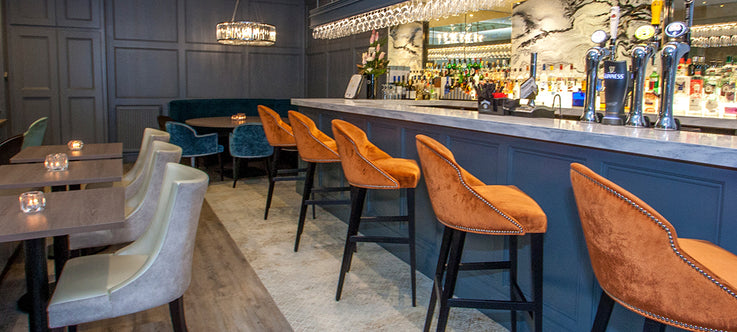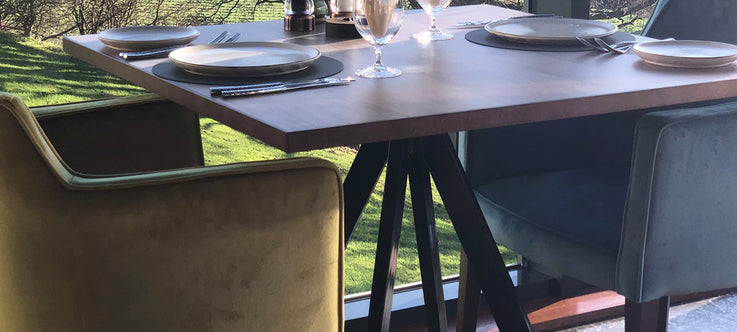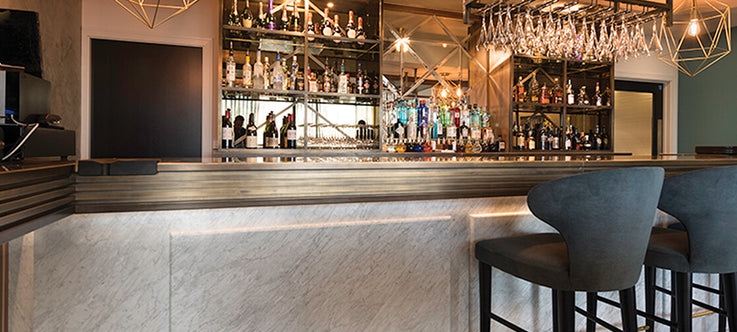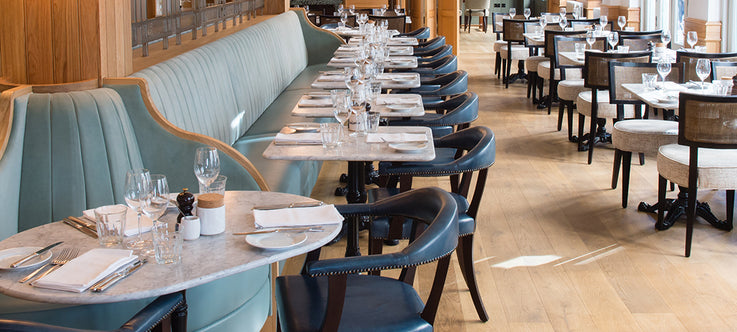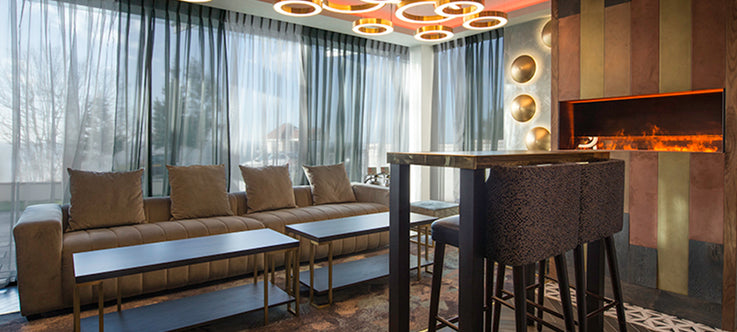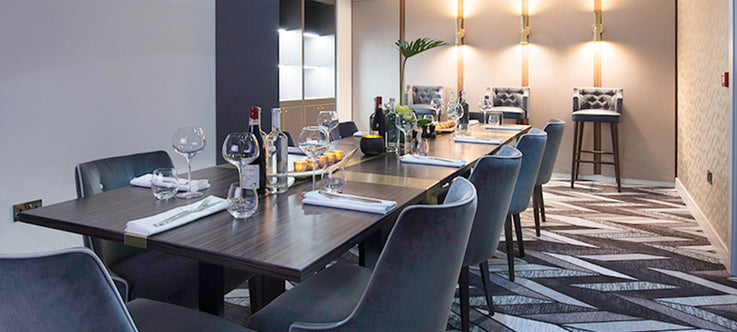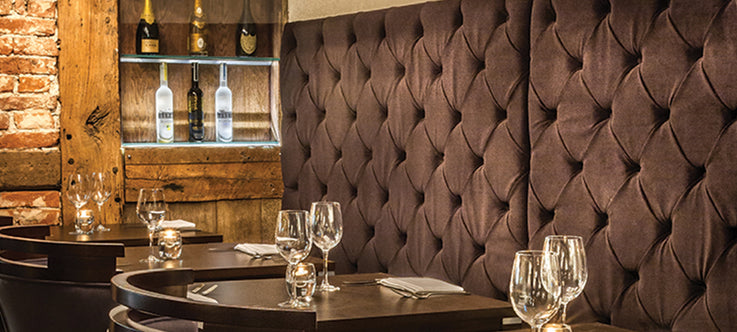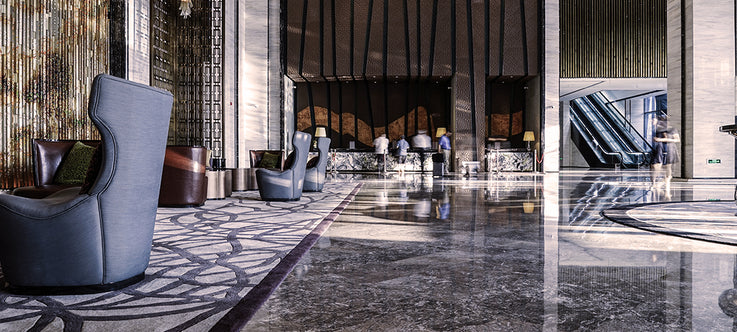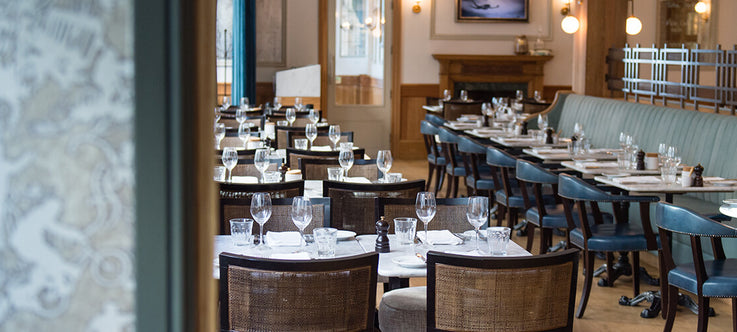

Lugo Furniture was specified by South African architecture and interior design specialists, Diad, to furnish the lounge, bar, and a 100 cover restaurant at Holiday Inn Express at London Docklands for Redefine Hotels.
DIAD generally design interiors of exclusive 5 & 6 star Hotels, Resorts and Spa projects around the world. The Docklands project was a little different to their usual brief and the designers at DIAD took comfort in Lugo’s experience of working with all IHG hotel brands over the years.
Our own design team worked with DIAD’s designers to source European contemporary equivalents to the specified upholstery fabrics for the scheme.
As always, all the furniture was delivered and installed by our own experienced in-house installation team and was considered to be a very successful project for all those involved.

Before choosing your contract seating for a hotel bar or lounge, it is important to consider three key factors:
1.Have a clear understanding as to “zoning” of the room and exactly what activities will take place in each zone i.e.: drinking, eating, working on laptops, sitting at a bar counter.
2.Equally important is calculating the number of covers (chairs) you need to accommodate within the space. This information will largely dictate the scale of furniture you can consider.
3.Know your budget. Clever use of less expensive chairs and upholstery fabrics will help you stretch the budget to its maximum.
Hotel bar chairs fall into the following categories:
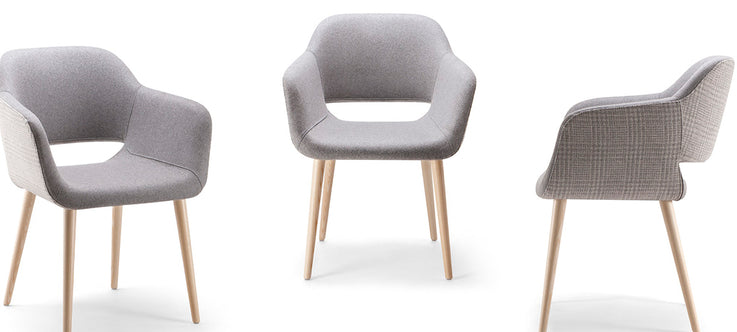
Tub chairs are typically medium sized and comfortable enough for guests to sit in for a significant length of time whilst enjoying a drink from the bar or watching a television.
The term tub chair is the most traditional description of the category and refers back to the classic barrel shape of the design. More contemporary versions of the tub chair deviate from the traditional tub shape and are more commonly referred to as club chairs.
Some tub chairs and club chairs are fully upholstered to the seat, back and sides with no polished wood on show except for the timber chair legs.
Many specifiers prefer to see plenty of “show-wood” on a chair but generally speaking the more show-wood, the more expensive the chair.
The addition of show-wood arms and backs reduces the chances of premature soiling of upholstery as guests handle the chairs.
Compact tub chairs accommodate a slightly smaller footprint to the standard tub chair. As such, they are very useful when attempting to maximise the room covers.
Compact tub chairs often come from families or ranges which allow the specifier to choose similarly styled pieces in a variety of sizes across a room.
Compacts make good bar chairs and multi-task well for lap-top users as they sit a little higher than the standard tub chair.
As a smaller chair, the compact tub also requires less upholstery fabric and as such is a more cost effective option when considering tub chairs or club chairs.
Easy Armchairs are a much larger scale of hotel chair and are the cosy late night drinker’s chair that envelopes the guest as they take their seat. Cushions can be feather filled or foam filled. Feather filled cushions provide a very comfortable seated position and a luxurious aesthetic. These are popular in 5 star hotels where housekeeping staff are trained to continually plump the cushions as and when required.
Foam is the most popular filling for contract hotel chairs as it retains its shape and is largely maintenance free. Lugo Hotel Contract Furniture uses different densities of foam to ensure that the most comfortable chair is produced.
Our chair designers can accommodate clients preferring a softer or firmer seat by altering the foam densities. This is often useful with hotels that have an older clientele who want additional support to their chairs.
Most Lugo sofas are available as a 2 seater, 2.5 seater, and 3 seater options.
Like our hotel easy chairs, our sofas can be supplied with feather or foam cushions.
Cushions can be fixed which means they cannot be removed or loose. Fixed and loose cushion options can be mixed on the same sofa if preferred i.e.: a fixed seat cushion with loose back cushions or vice versa.
Most of our sofas can be button backed if required. Button back chairs and sofas continue to be popular particularly with the boutique hotel sector.
Lugo has an extensive portfolio of sofas ranging from large traditional scroll arm designs to contemporary compact “box sofas”.Our sofas are available with a range of foot options from solid wood to metallic to ornate castors.
Lugo boasts a team of experienced in-house furniture designers who can help customers with bespoke designs should a particularly eye-catching chair, chaise longue, or sofa be required.
Signature pieces can work well in hotel bedrooms or in foyer areas as focal points when one enters the room.
Often bespoke designs are cheaper than anticipated. Sometimes bespoke may just mean adaptation of an existing design such as making the back higher, seat deeper, adjusting the back incline.
Whether a simple adaptation or a completely new seating concept, Lugo’s clients are encouraged to let their imaginations run free.
Lugo Furniture supplies only the contract hotel and leisure sectors and as such all fabrics that we use on our chairs must meet the relevant British Standards for abrasion and fire rating.
If we are asked to upholster one of our tub chairs in a pre-specified fabric which is not of contract quality we can usually treat the fabric or use an inter-liner to help it meet the necessary Crib 5 fire rating.
Where this is not possible, we cannot supply the furniture upholstered in a sub standard fabric and our sales team will do all they can to help the client choose a more suitable fabric from our extensive library.
Similarly, the contract standard for abrasion of an upholstery fabric is measured via the Martindale Test which states that 40,000 rubs is the minimum requirement for a contract installation.
If a client is adamant that they wish to use a fabric that does not meet the minimum Martindale requirement, we will supply the chair or sofa but our warranty will not underwrite the fabric and its subsequent wear.
Quality upholstery fabrics range from £10 sqm – £100sqm. With this in mind, it is worth spending some time choosing a well priced fabric as it has the most significant bearing on the cost of the furniture.
Lugo works with most of the leading fabric manufacturers such as Skopos Design, Panaz Fabrics, Sinclaire Fabrics, Zoffany Fabrics, Harlequin Fabrics, Warwick Fabrics, Sunbury Fabrics, Today Interiorsv Designers Guild to mention but a few.
Our Hotel Contract Furniture website is very informative and tells buyers or specifiers exactly how much upholstery fabric is required to finish the chair. The website also quickly allows visitors to search through our extensive product portfolio. Most questions are answered but those that are not can soon be addressed by our Customer Support team who are always on hand.

Table tops are available in a large variety of materials; Nevertheless, all of these options can largely be categorized into the following:
Solid wood table tops
Laminated table tops
Veneered table tops
Glass table tops
Timbers differ between the domestic and contract sectors; the most popular solid wood table tops for the hospitality sector are beech, ash and oak but other woods such as walnut, and sapele are also available.
Beech table tops are usually made in 25mm, 32mm or 40mm thickness. Beech is a blonde wood and has no strong grain patterning. As such, it accepts stain very easily. It is also the most popular timber used in contract furniture manufacturing because it is a very stable wood.
Ash table tops are typically 25mm thick or 32mm thick. Ash has a very distinctive V-shaped grain for those customers who like their timbers to have a little more character. Of course customers must appreciate that when tables are butted together in restaurants the grain variations between tables does not offer the same uniformity as beech.
Solid oak table tops have a more rustic aesthetic and are most commonly used in the pub sector wanting a “farmhouse” finish. Tops can be supplied in 25mm thickness or 32mm thickness as standard. Oak grains are graded depending on the scale of grain required and whether knots are desirable.
Walnut is an opulent looking timber from which to manufacture table tops. It is equally a very strong wood that can withstand the rigours of a busy restaurant. Walnut is available in 25mm thickness, although thicker tops can be manufactured to order.
Sapele table tops have a similar appearance to mahogany as it is a dark rich red African hardwood.
A veneer is a thin slice of wood which is stocked in 8’ x 4’ sheets. When using a veneer on a table top the veneer needs to be glued on to a core structure, usually MDF (medium density fibreboard). An MDF core is particularly stable and it will neither warp nor bend. Veneer can be added onto more exotic wood cores but this often results in the product being over-engineered and expensive as a result.
The most widely used beech veneer table tops have an exposed MDF edge. This is the most cost effective way of producing a veneer table top. An optional hardwood edge of 5mm adds a little cost but is worth the additional cost when considering the level of impact protection it offers the leading edges.
Lugo works primarily with the leading manufacturers of high pressure laminates (HPL’s) namely Resopal, Polyrey, EGGAR and Formica but of course we can equally accommodate any pre-specified contract standard laminate. HPL table tops are manufactured from the fusion of multiple layers of impregnated paper under high pressure and temperature.
Laminated tops are arguably the lowest maintenance specification for hotel tables as they are less susceptible to marking. They are easily cleaned and with a hardwood edge they are largely bullet-proof. There is a wide variety of wood-effect laminates that provide a rich warm textured aesthetic with all the practicalities of a HPL.
A curvaceous tactile edge profile but bull-nose edges will create valleys between tables when tables are butted together.
As the name suggests, the edge is cut straight to ease butting of restaurant tables to accommodate larger groups of diners.
Adds some interest to the edge detail but like the bull-nose will also create valleys when pushing tables together.
Works well with most table tops and allows the flexibility of butting tables together.
This is largely the same as a straight-cut edge but has a very slightly rounded corner to gently soften the aesthetic.
Available in 5mm or 10mm options. Adhered to the table edge to provide additional impact protection.

Contract Hotel Tables are supplied by Lugo. This is a guide to choosing an appropriate table for a hotel installation.
Clearly some table tops are much heavier than others and need a wider and/or heavier base. Materials such as a marble, granite or even a thick hardwood top will quickly become unstable if manufacturer’s guidelines are ignored.
Many hotel and restaurant General Managers prefer to buy pedestal tables rather than the conventional four legged dining table.
Although heavier for staff to move around a restaurant, pedestal tables can be easier to butt together to make longer tables for larger family or group bookings. Diners do not have to sit astride a table leg.
The housekeeping team can vacuum around a pedestal table leg with ease and metal bases withstand buffering from vacuum cleaners better than polished timber.
Pedestal tables can help to reduce the footprint of the table and chairs if space is an issue. Chairs can be pushed well under the table top.
Pedestal legs and bases can be fabricated from wood or metal. Where budget is a key factor, it is worth mentioning that metallic bases are usually less expensive than wooden table bases.
Metal bases are manufactured in great volume and are used within the hospitality, leisure and retail sectors for a multitude of applications. Wooden bases are most commonly made to order and will cost a little more.
The timber base provides a more classic aesthetic and is arguably a better option for fine dining.
Square tables do not necessarily require square bases. Many specifiers want the ability to butt square table tops together but avoid corners on the table base.
Timber bases can be stained to match the colours of other woods or veneers in the room and can be a great unifier to a scheme.
As a table base material, timber is much more versatile in creating something more bespoke to compliment the scheme.
Many wooden tables have a cruciform base (a timber cross). Cruciform bases are continually popular for their look and their stability.
Although Lugo has an extensive standard range of table bases, the vast majority of tables sold are adaptations of our standard products or fully bespoke. It is important to us that the hotel designer gets exactly what is required to suit their interior scheme.
Black cast iron bases are relatively inexpensive and are the entry level product when considering a metal table base. This is a sound choice when budget is restrictive and tables are to be clothed.
Silver pedestal bases are available in chrome or stainless steel.
Chrome table bases are very popular, but they can require more cleaning by housekeeping teams as chrome looks at their best when it is polished and free of scuff marks and finger marks.
Stainless steel is an ideal finish for a pedestal table base. Stainless steel is available in brushed stainless steel or polished stainless steel.
The polished stainless steel base provides a more quality aesthetic over its chrome cousin. The brushed stainless steel option provides a matt finish which many operators prefer.
Use of a primer on cast iron bases means they can be used outdoors.
Most exterior pedestal table bases are made in aluminium as it will not corrode and is light to manoeuvre.
Table sizes can be adapted to suit but our standard dimensions are:
We produce and supply chairs only for the hotel, leisure and cruise sectors. It is pivotal to our product development and portfolio selection process that all goods sold are fit for purpose.
To advise customers as to the considerations before investing in hotel furniture we would suggest that the article below written and issued by Satra Testing and Research Facility is well worth the time to read.
The main issues faced by UK-based suppliers and purchasers of furniture for hotels and other similar establishments, including beds, seating, desks and tables, are:
Purchasers of hotel furniture will find it useful to use a written specification, which will indicate the minimum performance and safety levels needed to satisfy any regulations and to minimize wear of the products.
Finishes on the surface of tables should meet the minimum requirements for durability, including scratch resistance, resistance to hot objects and resistance to liquids. In addition, the fabrics or leather covers selected for use on seating should meet the minimum performance requirements, which will help to significantly reduce or eliminate customer complaints during usage. Key attributes of fabrics or leathers for upholstery are light fastness, abrasion resistance, rub fastness, seam strength, pilling and soil resistance.
In the UK, hotel seating must meet the flammability requirements specified in BS 7176 so that it is resistant to ignition sources including a match flame and cigarettes, even though smoking is not permitted inside public buildings in the UK. It could be argued that smoking in public places or hotel bedrooms might occur despite rules and regulations. Therefore, this activity might be interpreted as ‘foreseeable misuse’.
In other countries, smoking may be permitted in bedrooms and public areas depending upon local regulations. Suppliers in non-UK countries should check with local authorities on current requirements for fire safety.
“Some of these issues would have been prevented if suitable specifications and product or material testing had been carried out before the contact for the purchase of the furniture was agreed”
Reception furniture, including coffee tables, sofas or chairs, will be used by persons entering the building with luggage and possibly wet or damp clothing such as raincoats. There is a risk that wet clothing and sharp parts of luggage could damage or mark upholstered furniture.
SATRA has inspected hotel furniture on many occasions for various clients. A list of some typical problem areas witnessed include:
• Fabric, allegedly snagged either by clothing or luggage
• Polished tabletops scratched by luggage studs and other sharp objects
• Decorative embellishments on seating (including buttons, tassels, fringes and trim) that have become detached or loose
• Soiling and water damage of upholstered furniture by accidental spillages or from wet garments such as raincoats
• Polished tables damaged by liquids and hot objects.
• Excessive movement of the cover of cushions, resulting in loss of shape and distortion of seams
• Gaping seams on upholstered seating
• Loose joints in dining room chairs.
Some of these issues would have been prevented if suitable specifications and product or material testing had been carried out before the contact for the purchase of the furniture was agreed.
Most bedroom furniture for hotels is bespoke manufactured and is made further to a comprehensive site survey considering access for off-loading goods, skirting profiles, dado rail profiles, ceiling heights, electrical points etc.
Over the years Lugo Hotel Contract Furniture and sister company Furnotel have become very proficient in helping hotel operators, interior designers, property developers, architects, procurement companies in ensuring that they achieve the maximum specification and aesthetic impact for their investment.
The hotel bedroom furniture represents a large proportion of the overall joinery package and contributes to a significant percentage of the FF+E budget.
When planning a hotel bedroom it is usually a good idea to start by loosely “zoning” the room.
It is usually a sensible idea for the guest to store his/her suitcase near to the door within the lobby zone. This reduces wear and tear on the room with suitcases banging walls and other furniture further within the hotel bedroom. As such, it is always a good idea to position the luggage rack and ideally the wardrobe within the lobby zone if possible.
Larger bedroom lobbies may also be big enough to accommodate some form of tea and coffee making unit.
Once the zones have largely been identified the specifics of the furniture itself can be considered.
Most budget brands opt for MFC (melamine faced chipboard) furniture which is cost effective and easily maintained. PVC edge details can be added as an on-cost to ensure that facing edges resist impacts.
MFC installations are usually relatively fast as panels are joined quickly via cams.
Generally, three, four and five star hotels require bedroom casegoods with a real wood veneer finish which gives a more opulent aesthetic.
The veneer can be applied to an MDF (medium density fibreboard) or a chipboard core. The vast majority of Lugo’s bedroom furniture is manufactured with an MDF core which produces a very robust piece of furniture.
When choosing veneers, the veneer grain should first be considered.
Some specifiers like to see the rich tones of the wood grain and opt for veneers such as walnut. Other prefer blander veneers that give a more solid effect such as maple or beech.
Thereafter, the veneer can be tinted (stained) in the factory to whichever colour is preferred.
As a rule of thumb standard sizes for hotel wardrobes are as follows:
Single wardrobe: 600mm wide x 600mm deep x 1900mm high
Double wardrobe: 800mm wide x 600mm deep x 1900mm high
A blanket shelf above the hanging rail is a usual pre-requisite to house a spare pillow.
One half of the hanging rail should allow at least a couple of long coats and long dresses.
The other side of the wardrobe internal can be compartmentalised to accommodate a room safe, tea tray, ironing board, luggage rack if required.
Wardrobes can be value-engineered to reduce cost by using slightly thinner panels on the internal sections i.e.:19mm internal shelves but 25mm or 30mm thick doors.
A minimum of three wardrobe door hinges are required but four or even five hinges are preferable for heavier door panels.
There is a wide range of handles available to suit any application. Cost can be saved by cutting finger pulls into the doors in lieu of handles.
To enable the desk to multi-task effectively, it is advisable to attach an upstand to the rear edge of the desk which runs approximately 300mm up the wall. This upstand accommodates electrical sockets and allows electrics to be run to the desk for laptops, hairdryers, lamps etc. The timber upstand prevents the wall decoration from premature finger marks around the sockets.
Drawers add expense to your dressing table and unless your hotel accommodates regular long stay guests, it is a cost that you can easily do without.
Drawer runners should be robust steel runners and not cheap nylon alternatives which will probably not perform well in a commercial setting.
“Soft close” drawers are an optional extra which help reduce wear and tear but also provide a more elegant upmarket feel to the furniture.
Many hotel operators prefer to leave dressing table/desk tops clear for guest workspace and as such require a shelf within the unit for the tea/coffee tray. This can be sliding shelf that allows the guest to easily access the refreshments.
Wherever possible it is preferable to mount televisions on the wall to free up desk space. However, where there is insufficient wall space to do so, a longer desk may be required. If desk-mounting televisions it is essential to use flat screen technology to minimise the TV footprint within the desk.
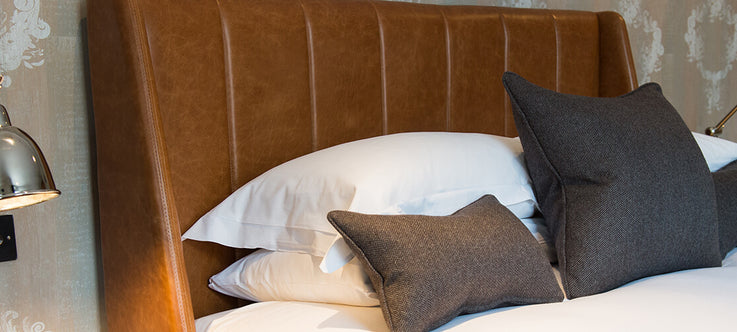
Headboards can be upholstered or veneered, or indeed a mixture of the two.
Timber headboards can accommodate bedside lights and switches so that bedside units remain uncluttered.
The benefit for the housekeeping team is that they can easily vacuum around the bed.
The disadvantage of bible boxes or headboard bedside shelves is that they do not accommodate zip and link beds. Where zip and link hotel beds are being used, freestanding nightstands are necessary.
Where freestanding bedsides have been specified, they should have no more than a single drawer ideally to keep them light enough for the housekeeping team to move if they need to reconfigure beds.
Alternatively, the luggage rack can be a unit in its own right and can house storage drawers beneath it if additional room storage is required.
Again an upstand is recommended at the back of the luggage rack to protect the wall from suitcase scuffs. The veneered top surface of the hotel luggage rack should be covered with stainless steel or brass bars to avoid veneer scratches.
Free-standing TV units are only deployed when the hotel bedroom has a particularly large footprint such as executive rooms, suites or within luxury hotel accommodation.
We hope the aforementioned provides some assistance when designing bespoke hotel bedroom furniture.
The benefit of cabaret style is that it’s a relatively informal way of seating and allows your delegates to interact more than if they were in rows of seats (theatre style, see below). The downside to using cabaret style seating is that you will require a much larger room and invariably your minimum delegate number required by the venue will be much higher and this will increase your conference costs.
To recap, when it comes to choosing a seating layout think about the type of event you are hosting; whether interaction between your delegates is important.
We hope this brief document will assist you in considering the increased cost of hiring a larger function room to seat delegates in a cabaret style set up versus a smaller room set up in theatre style.
Banquette creates cosy intimate booths for guests to eat and drink and provides a degree of privacy. Nevertheless, its main benefit is that it helps the hotel operator to maximise the dining covers when floor space is limited.
Lugo Hotel Contract Furniture designs all of its Banquette seating in-house via our skilled furniture design team and we aim wherever possible to design the banquette in such a way that the form creates a focal point within a bar or restaurant interior around which loose furniture can be strategically placed.
When designing a restaurant interior it is important that the furniture is not all of one level or the stylish restaurant can soon take on the more utilitarian aesthetic of a canteen. Banquette seating allows the designer to introduce these important height differentials.
High-backed banquette seating or simply upholstered wall paneling provides that pivotal focal point for the diner or guest when they step inside the restaurant or bar.
Banquette can also be used to denote the main direction of foot traffic through the restaurant or bar to allow hotel staff to undertake their work with the minimum disruption to service.
Similarly, it can be used to divide a room i.e: from a restaurant to a bar area or to divide from a servery to the restaurant.
Despite its obvious benefits, the Archilles’ heel to banquette seating is its lack of flexibility. Much of the banquette seating sold is not easily relocatable.